Saturday, August 10, 2013

I Must Not Be Batman

You know what's really cool? We're gonna talk about deontology vs. utilitarianism in terms of superheroes, and you're going to understand. 
Aren't comics awesome?!

For those of you who don't notice the logos that precede the blockbuster movies you've been watching recently, in the world of comic book superheroes, there are two giants: Marvel and DC. Now, upfront, I'll cop to being a Marvel fan more than anything else. Spider-man is my spirit animal and I've never really connected with any of the characters in the DC Universe.

There is, however, a reason for that. You see, Marvel makes characters, and sometimes they make heroes. We can connect to them because they're flawed, and human, and they're often losers. But DC is different. DC makes ideas.

Hang with me on this. We'll start with Superman.

And I love you, Random Citizen! *

*Not actually Superman quote.

Superman is maybe the most famous superhero on the face of the planet. In case you haven't left the shelter of your rock since 1938, he's an alien who escaped to Kansas when his home planet exploded, leaving him the last of his race. It's fortunate there's only one of him, because Superman is terrifying. Superman is a physical god. He's faster, stronger, and more resilient than anything Earth has ever managed to crank out. Compounding that, according to All-Star Superman, his brain is super, too. He can see wavelengths humans might not even know about, and his mind operates at a swifter pace. Basically, he wins at everything, always.

On a story theory level, this is a serious problem, because people rarely take an interest in god-level characters. God-men don't struggle, and stories without struggle aren't interesting. So the problem the writers of Superman are faced with is how to make Superman somebody worth reading about. Clearly they succeeded—if they hadn't, we wouldn't be churning out movies, cartoons, and songs (and songs, and songs, and songs) about the guy. And Bill (the guy who gets killed) wouldn't spend three solid minutes talking about him.

The trick is that Superman's struggle is all to do with his monumental choice. Given what power he has, he has to decide whether to save the world or destroy it. He's a giant walking among ants. He can do whatever he wants. So he decides he wants to save it. (Check out this video for a much more detailed look at this aspect of his character.)

Of course, the thing about being a giant is that you have to be very, very careful where you step. So Superman is always following his own unbreakable code of ethics. He doesn't lie, cheat, steal, or play dirty at any step of the game. He's a dyed-in-the-wool Boy Scout.

Batman could not be more different.

Taking a fiercely contested second place to Superman for most-recognized-superhero, Batman makes up for it by being, perhaps, the most butt-kicking. In direct contrast to Superman (who has ALL the powers) Batsy has no superpowers at all (except his budget). He's a master fighter, a spectacular detective, and generally a terrifying ninja. But he does it without any supernatural powers. Where Superman is godlike, Batman is wholly human.

To make up for his lack, though, Batman has no limits. He has exactly one rule ("Thou shalt not kill") that he won't break, but short of that, anything and everything is fair game. He will do whatever it takes to stop the bad guys, from psychological warfare to breaking bones to spying on an entire city. From his perspective, these are necessary—he has nothing else to fall back on. Superman can afford to be a Boy Scout because he has enough power to back it up. Batman doesn't, and therefore can't.

Loosely speaking, Batman embodies a utilitarian ethic ("the end justifies the means"), while Supes personifies a deontological one ("the means justify the end"). This delineation defines almost every aspect of their personalities. Superman is associated with truth and justice, while Batman is known as the Dark Knight. Superman is polite, well-intentioned, and cautious. Batman is gruff and he will slam your face into a table.
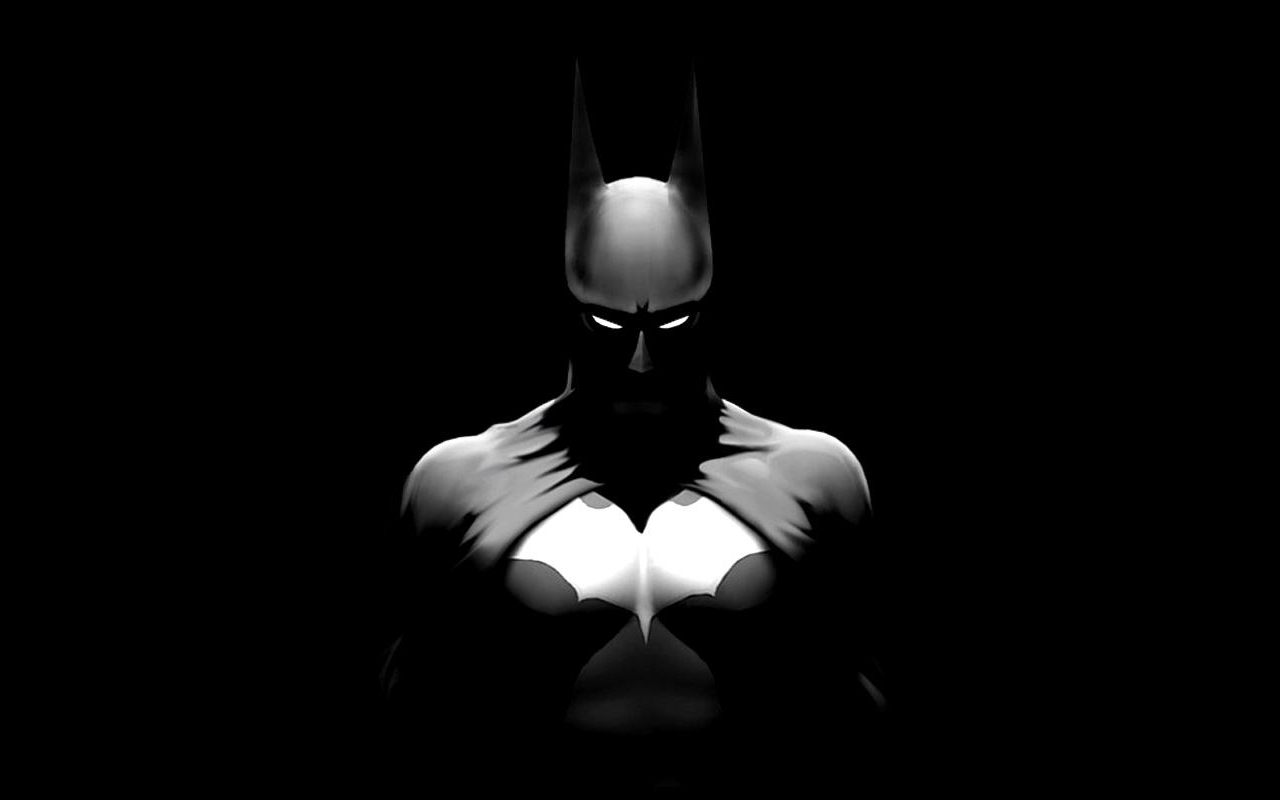
He is the night, and he does not have time for your nonsense.

You can learn a lot about a culture by looking at the heroes they immortalize in stories. Greece had Odysseus, Rome had Julius Caesar, France has...erm...I'll go with Jean Claude van Damme. And America has Superman, Batman, and all the characters falling in between.

For a long while, Superman was considered our biggest cultural icon. He was the principal figure of the Golden Age of Comics, when men were men, übermensch were übermensch, and women were just...sort of...there. (Because there had to be some diversity, right?)

The Golden Age of Comics, though, eventually gave way to the Modern Age (where we are now). In the Golden Age and most of its successors, comics leaned Superman-wardly, because America thought of Supes as our avatar in fiction. Like Superman, we were powerful and responsible. We needed to be careful where we stepped. Most of all, we were required to be righteous—to do the right thing, no matter what it cost in the long run.

But in the Modern Age, that zeitgeist has vanished. Comics have shifted away from Superman's rosy perspective to the grittier world of the Dark Knight. The 80's saw the deconstruction of the superhero-as-a-nice-guy. Now we have Jack Bauer, Gregory House M.D., Ozymandias and Rorschach, and the Doctor. We've crawled sneakily away from the shiny ethics of Clark Kent to the far more frightening, far more efficient world of Bruce Wayne. We care more about competence than compassion.

This isn't just evident in our stories, or in our politics (looking at you, U.S. government). Look closely enough and you'll see it everywhere. The temptation is to buy into Batman's worldview, because, let's face it, Batman gets the job done. He does the only thing that makes sense. His world doesn't have rules, and even if it did, there's no one to back them up—except him. He does what's necessary because no one else can. Compassion is well and good, but he'll take competence every time.

I worry that sometimes I tend to think that way, too.
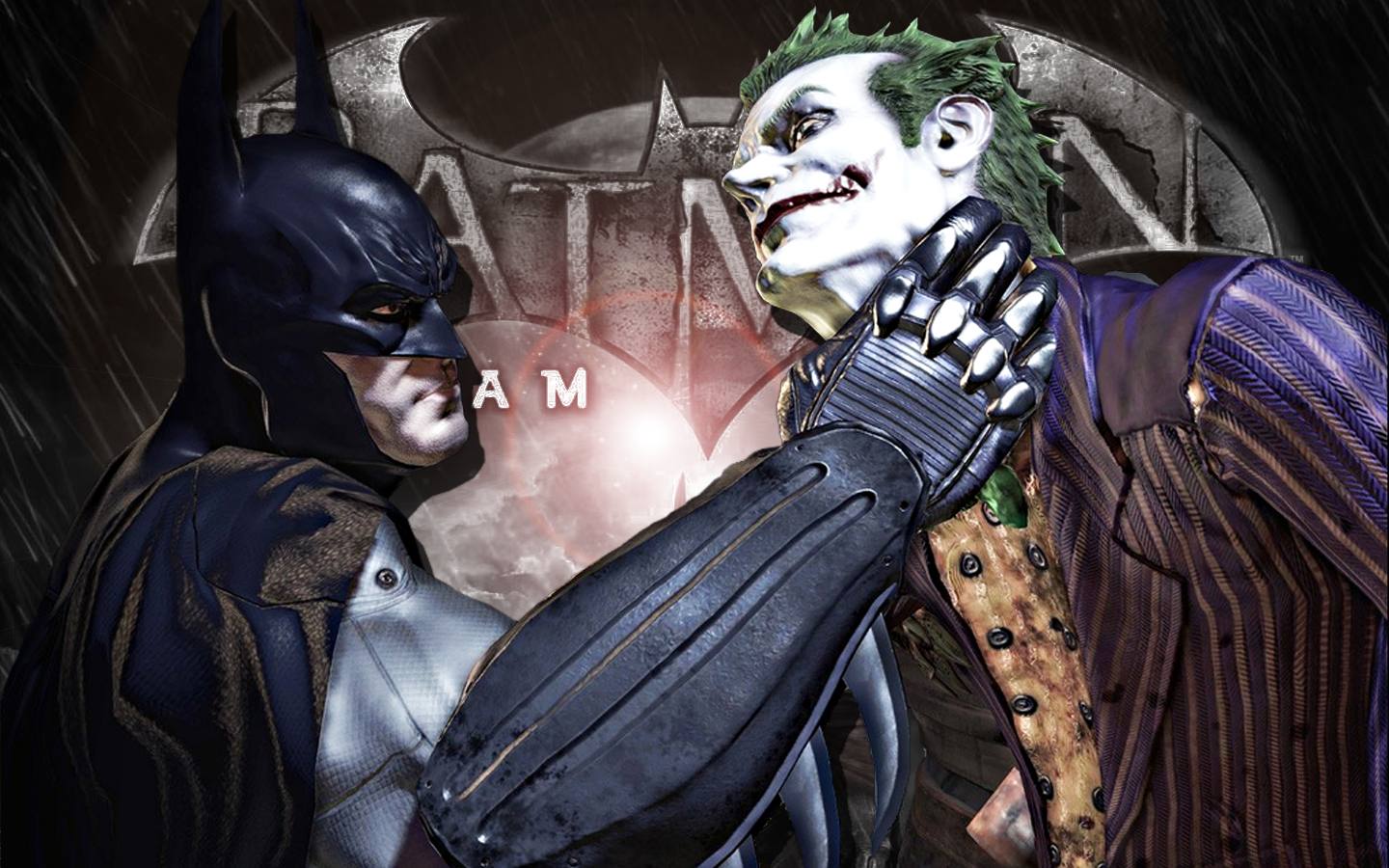
I'm the guy on the left.

For a long while, I've had a serious issue accepting the Christian subculture, because for the most part, it is just that: sub-cultural. Our attempts at making art are generally not very good. (I'm looking at you, Facing the Giants. And you, Fireproof. And you, Family Christian Bookstore.) Our church services can often really suck. So, too, can our church communities. As a widespread rule, I did not find the church able. They weren't competent. They had a job to do and they were failing to do it.

I couldn't forgive that.

I've been confronted, though, with the fact that God does not go looking for competence. In fact, "competence" is somewhere near the bottom of the list of divine qualifiers. If memory serves, God picked someone for competence once. Once. (It's in 1 Samuel. The candidate is good-looking, a powerful warrior, a compelling speaker. He's the king Batman would choose. He tanked the job so bad that God picked his successor halfway through his reign. Nothing like meeting your replacement, especially when he's a scrawny, metrosexual, seventeen-year-old shepherd with a thing for the harp.)

Missionary to the Gentiles? Started out as a religious persecutor. Apostles? Mostly uneducated fishermen, plus a slimy money launderer and a terrorist. Best-known Jewish king in history? Promoted from "sheep-herder boy." Savior of the human race? Born amongst pigs and cattle, to a disgraced 16-and-Pregnant mother and a seemingly-cuckolded carpenter, in a backwoods town in a downtrodden nation of failures and former slaves.

God does not pick based on competence. It's not His style.

With this in mind, I'm making a resolution: I must not try to be Batman any more.

Let competence live and die on its own.
Let the Christian cool factor fluctuate.
Let my instinct to be awesome—to do awesome things that would make God proud of me—starve to death.

So Christians really suck at making movies/music/what-have-you. Our competence isn't what saves the world.

That's Jesus' job.

Time to leave it to Superman.

Thursday, May 2, 2013

So What Is a Writer, Really?


What is a writer?

Are you ready for this? I'm going to blow your mind.

A writer is one who writes.

Take note of the present tense, as it is the most important part of that definition.


I think most aspiring writers have adopted the mindset that "writer" is an adjective written on our hearts from the day we were born. It means deep thinker, and storyteller, and wordsmith. It almost always means lover of books, and words, and ideas. It can mean poet or newsman or novelist. In popular thought it rarely coincides with "mathematician" or even "able to add things." But we view it as irrevocably and undeniably a part of who we are. Whatever else may happen, our identity is firmly lodged in two things: "I am human," and "I am writer." Nothing removes that.

This, I think, is wrong.

One who writes. That's it. That's all there is to that definition. It doesn't have to mean published. It doesn't even have to mean good. But it connotes a necessity of persistence.


A writer is not "one who wrote while in high school, but recently has been focusing on other projects." A writer is not "one who got good grades in English class and has a brilliant idea for a book." A writer is not "one who dreams wistfully of becoming J.K. Rowling/J.R.R. Tolkien/C.S. Lewis/K.A. Applegate/Robert Heinlein/Patrick Rothfuss/what-have-you."

It can have those things. But they're all useless to you unless you're doing. Wanting to write, having written, trained in writing—these are all good things. Wrote a novel once. Have a great idea for a book. Love writing.

Those are excellent, in fact. But they are useless to us unless we are writing.

Someone who claims to be an athlete but never sets foot in a gym is not an athlete. A carpenter who never touches wood is not a carpenter. A practitioner who doesn't practice is a liar or a fool. The practice—doing the thing—is built into the word.

You may feel that writing is a thing etched into your soul. I wouldn't be surprised if it is. Communication is one of the great human purposes. It's how we brush up against the soul of other humans.

But what use is a thing in your soul if you never pour it out through your hands?

*

I must be honest with you: I'm dogmatic on this because I can't afford not to be.

By my own stringent definition, I've not been a dedicated writer for three months. When I wrote the 64-Day Hypocrite, I fully intended to get back to writing. To get back in touch with the wild thrill of making things up and writing them down. And, to an extent, I have. But not yet to the same degree I had in January. It's hard to gain the momentum back. I know it's possible. I just haven't had the requisite willpower to do it, and now school has fallen on me like a granite block and I can't wriggle out long enough to scribble a single meaningful sentence. All my creative energies go toward school and people. Even this blog post is an assignment.

So, in a sense, I have an excuse, and that's the most dangerous place in the world.

I can't afford to have excuses for very long. Even less can I permit myself to buy into the idea that we're defined as writers by our passions instead of where our passions drive us. If I shift the definition of the word so that it will always include me, no matter what I do with my time, then I have no need for relentless creativity. I'm still a "writer" if I lay in bed all day and do nothing. I'm still a "writer" when I while away my hours on video games. In short, folks, I would have no need to DO anything.

That's what matters, really. It's not what you are. It's what you do. It's where your time goes. It's where your passions lead you. You can make claims all you like, the way I've done for so many years—being a hobbyist writer talking about how awesome things were going to be when I finished the writing that I wasn't really doing, instead of a dedicated and purposeful maker. That's the difference. That's the knife edge separating fulfillment and bitterness: while self-important hobbyists wax eloquent of the things they'll do when they have the time, the ones who care enough to succeed are busy doing it.

What are your thoughts, reader? What is a writer, really?

Thursday, April 25, 2013

The (In)Complete List of Tips to Stay Creative

One of the most miserable questions with writing is the inevitable one of creativity: "How do I stay creative? How do I avoid writer's block? How can I keep writing?"

Personally, I'm of the opinion that writer's block is just creative fatigue (or sometimes fear), and the best way to keep writing is just to grit your teeth and move ahead—it's easier to edit a poorly-written page than an empty one—but even so, it's good for creative muscles to stay limber. So I'm gathering as many tips for staying creative as I can, and leaving them here. It will probably grow. For now, I'm organizing it like an exercise regimen, because it's the closest metaphor I can think of.

Let's get straight to it, then, shall we?*

Stretches

Cramps happen in the body, but they can happen creatively, too. Limberness can help prevent stiffness in your creative output.
  • Make lists.
  • Make charts.
  • Make maps.
  • Make diagrams.
  • Sketch things.
  • Have a way of keeping track of ideas, even if it's just jotting them down on your cell phone or in a notebook. (Actually, notebooks are great if you're into the romanticized writer trope.) This isn't initially a way of getting great ideas, at least not at first. But it's helpful in the long run. If you don't treat any ideas as worthwhile, you train yourself not to have any more of them. Quantity's no guarantee of eventual quality, but it can certainly help.
  • Think deeply about things—even silly things (especially silly things). Why do you believe what you believe? Why does culture function this way and not that way? What would happen if—?
  • Entertain every idea to the fullest extent you can manage. Even if the idea amounts to nothing, you've made your ideation more flexible and robust.
  • People-watch in the least creepy manner available to you. Make up stories about what they're doing, where they're going, and why—always why.
  • Surround yourself with creative people. Make them your friends. Bonus points if they're actually fun to be around.

Diet

For a while, I thought I was really good at this. Put simply, I'm an art glutton. I can watch TV all day if you let me. I sucked, though, at thinking about the art I kept ingesting. There was no consideration in my consumption. That's crucial. You can't just watch things or read things and expect it to make you a better writer. As in love, so in art: engagement is a big deal. (That's a horrid joke and I'm ashamed of it.)
  • Ingest art you love. What about it appeals to you? Why does it resonate? Try to see past the curtain. What's going on behind the scenes?
  • Consider art you hate. (Don't do too much of this or it might seep in.) Why don't you like it? What about it conflicts with your own artistic sensibilities?
  • Analyze successful books, movies, or shows. Pick them apart mentally and with friends.
  • Try to think in archetypes. Break stories down to their tiniest parts and see what they really are. A good way to do this is to transpose stories. "This is about a football team in west Texas, but what if it's just the same as King Arthur's court?" Alternately, check out this compilation about how Taken and Finding Nemo are almost the same movie, in a way.
  • Find some music you can listen to without becoming distracted. I'm partial to ambient music, like Embers, the Album Leaf, Explosions in the Sky, or Port Blue, but that may not be your style. Peers of mine will often listen to music that reflects the mood they're trying to write in, be that slightly frenetic or folky or stately or whatever. The key is that it not distract you from what you're writing.

Workout

Once you're limber and well-fed, the really tough part of actually doing stuff comes around. This is where most of us get a bit gun-shy (or maybe that's just me). It's necessary, though. We must work at it. It's not enough to be a creative genius or an incisive thinker if you never do anything with it.
  • Write.
  • Keep writing.
  • Take a break—but try to do this only after you've actually done something. Creativity is like a muscle. It's good to rest it after a workout, but if all you do is rest it, nothing gets done.
  • Write some more.
  • Get feedback from some of the creative friends you made back in Staying Limber.
  • Keep writing.
  • Finish things.
  • Edit the finished things.
  • Edit some more.
  • Believe in what you've made.
  • Get more feedback.
  • Remember: no one is obligated to care about your story, so it's your job to make it as brilliant as it can possibly be. Edit some more.
  • Stay focused.
  • Write.

Hazards

Nomming on the Galactus Burger with an XXL packet of fries and a 72-oz. bucket of sugar water, augmented by the Double Death by Chocolate Shake, is explicitly forbidden in the codes of exercisers everywhere (even though none of the above items technically exists). Same thing with creativity: there are some things which simply aren't wise to do. They'll gum up the works hard and fast.
  • Time-waster sites. I won't list them here (since that would only give us more things to use for time-wasting), but it's not as if they're hard to spot. Odds are good that as soon as you read "Habits to Avoid," you thought of one. One helpful tool for preventing Internet time-wasting is the Stay Focused Google add-on.
  • Most video games. While I won't deny they can be fun, and even sometimes a form of storytelling, most of them are a numbing agent. They're doing you no good.
  • Mindless television.
  • Beating yourself up. Self-hatred is a pretty standard human problem, but indulging in it isn't going to do you any good.
  • Hating what you make. Also nearly universal problem, but a terrible habit to keep. If you start hating what you make, take a step back from it.
  • Shooting down ideas for not being "good enough." Doing this trains your brain never to think of any ideas. Play with any idea that crosses your mind.
  • Stopping in the middle of something. This is, by far, the hardest one for me. In my entire life, I've finished exactly 1 (one) longterm project. It was 332 pages, single-spaced, and it was awful, but it was finished. Finishing things is a critical habit to have.

Miscellaneous Encouragement


*If you happen to be a creative type, but not the writing creative type, good for you! Parts of this aren't quite going to be geared toward you, but in general if you replace "write" with "make stuff," you should do just fine.

Thursday, April 18, 2013

The 64-Day Hypocrite

Some of you may have noticed a general theme in the blog of late—a sort of general purposefulness that it really lacked several months ago. Among these is the overall productivity of it. I've written more on the blog in the last two months than I have for a long time. Part of that's due to a class (I'm required to do it) and part of it's due to the excitement I started feeling about five months ago.

In October or November, I applied to go to a writing conference happening in February. I was so excited about the idea that I started brainstorming and outlining and (most importantly) writing for three solid months. It got pretty crazy—during January, I pumped out about 2000 words a day. And I was enjoying it.

There's nothing quite like the languor after doing things you love to do. Added to that was the feeling of completeness that comes when you remember that you do love it, and why. In short, it was a good month.

By mid-February, I had nearly 95,000 words of a manuscript. When I first outlined the book, I anticipated something close to 100,000 words in total; by the time I reached 95k, it was looking more and more like the book would round out at 150,000. I was okay with that, though. I could handle doing more of this. With the resurgence of schoolwork and social commitments, it had become harder, but I was willing and ready. Another 50,000 words was nothing.

*

After the conference, the writing stopped. My momentum deadened, and my zeal to complete the project petered out. I became more concerned with other, ostensibly more important things: homework, sleep, reading, video games. I kept telling myself I would return to the project and finish it, because that's what a writer has to do.

About 30 days after I'd stopped, I returned to the project and realized there were a number of things I needed to hammer out. Following an old personal tradition, I restarted the project, beginning with pre-writing. What followed was a long period of vacillating over fiddly world-building details, like the history of the setting and the mechanics of its magic, and vain attempts at character sketches. I'm not good at character, so sketches are an important step in the pre-writing.

So I hacked out the kinks in the magic system. I drafted possible character types, and supplemented those by ingesting really good character drama (read: watching the first few episodes of Friday Night Lights). And time passed, and I didn't write.

Day 40 came and went, and I didn't write.

Day 47 came, and I noticed, and I said, "I'm definitely not going to go fifty whole days without getting back to it."

(Because I needed to, and I knew that—cognitively, at least. I didn't know it in my gut anymore. I'd gone too long without it, so my body forgot ardor in favor of languor.)

Day 50 came, and I wrote...and then stopped. I gained no momentum. I couldn't have written much more than 500 words.

Day 51 came and went, and I didn't write.

*

As of this writing, I've gone about 64 days without returning to that fierce, reckless creative passion. That's 64 days of pure, stupid hypocrisy, because I've been pretty dogmatic about the idea that writer's block is an excuse, and a really, really poor one at that.

So I'm taking a more optimistic view. I'm not blocking up. I'm stocking up.

After a period of intense activity, the body must rest. So, too, it is with creating, I think, because creativity is a muscle. Going and going and going—and then going some more—is not feasible at my level. I'm not an Olympian of this craft. Not yet.

So this is a rest period, and it's temporary. I cannot allow it to be permanent. That is within my power. Continuing in the lackluster boredom—this paltry excuse for creativity—is not permitted.

Because I have found a thing man searches for his entire life: joyful effort. "Making things up and writing them down," as Gaiman says, is the first thing I've found that makes me itch.

This is the crucial thing. This is the heart of it. I have written out of shallow pleasure, out a desire to be admired, and out of a need to validate my childhood hobby. None suffice. They cannot sustain creativity, because there is nothing undergirding them—no skeleton, no true fire. They are shaped (vaguely) like the true thing, but the longer I look at them, the more they are revealed to be grotesqueries. They are not willing to endure when creation is boring, or when it is hard to create.

No, writing must come from the central place, from the nucleus of the impulse, purely from a love for creating things. It cannot be swayed by storm or, more deadly, by stillness. It will be work, and it will be lovely.

What now? That's simple.

Write.

Thursday, March 21, 2013

Why Wattpad Gives Me Hope (Lots and Lots and Lots)

Some days, the Internet is just awesome.

Some of you may have heard of Wattpad, the website where undiscovered writers can fling their stories out into the ether and hope for general approval. Others might have heard of Jukepop, which is sort of the same thing except with serialized fictions. In general, these sorts of sites cater to a very particular demographic: that of people who think of themselves as writers but just can't buy a book deal. (Oh, just kidding, the Christian Writers Guild has made that possible. ZING.)

I've mentioned these kinds of people before: the ones who talk a pretty good game about all the writing they're doing, but don't tend to, you know, actually write. The ones who treat an ancient and noble artistic pursuit as a hobby that anybody can do, because...really, how hard could it be?

The thing that I often miss when I rant about pretentious hacks is that, sometimes, there are diamonds in the rough. Every author has to start somewhere, and more often than not they start as pretentious hacks. How could they not, after all? Writing—and, more directly, making your writing public—requires an interesting degree of blind arrogance. Making your work public implies that you think the public might actually like the things you've written. Putting your work out there, even if it is just a website that caters to narcissism, is a step in the right direction. Heaven knows that writing you keep hidden in your desk drawer isn't going to change any lives.

Especially since, sometimes, self-publishing your work can pay off.

Beth Reeks (pen name Beth Reekles) is a 17-year-old writer who published a teen romance on Wattpad. She did what a number of authors have advised since the dawn of the written word: write what she wanted to read. She'd grown tired of vampires, werewolves, and fallen angels; she just wanted a teenage romance. So she made one, and she made it well, and it earned her a number of fans on Wattpad.

And then Random House heard about her, and now she has a book deal.

I only get to say this once because I hate needless repetition, so I'm going to say it as loudly as I can in typed words:

THAT'S AWESOME
THAT IS TOTALLY WICKED AWESOME

A 17-year-old kid getting published? Getting fiction published? That's the stuff of legends, folks. I just want to shake this girl's hand. What a champ.

It's stories like these that give me hope for writers and for starving artists in general. See, Barnes and Noble is on its way out. Borders is dead. Some nutcase author wants libraries to die. In short, the world of the printed word is in some pretty significant turmoil. Nobody's quite sure how everything is going to shake out. Will the next generation even care about stories when they can view all their stuff through neurological implants? Now that we've mastered video technology, are words even relevant anymore? Can the world of literature ever bounce back from Twilight?


The short answer is...yeah. Duh.


The world is changing, but this isn't the biggest change the world's undergone. It's just the biggest one we've been alive for. (Every wave seems huge when you're inside it.)


Maybe printed books die out and maybe they don't. (Here's hoping they don't.) And maybe the publishing industry is going to convulse and explode (which I'm not entirely sure is undeserved). And maybe my grandkids will think of books the way I think of vinyl records: quaint and romantic, but obsolete.


I doubt it. But, even if the printed page dies out; even if the book publishing industry goes belly-up; even if the libraries vanish....


The stories live on, and the storytellers keep appearing.


The Internet and its utterly public forum gives me hope for this. These days, all you need are 1000 people who desperately want you to keep making art...and you can. Artists have always survived on the charity of people who like their stuff; it's only in the era of Indelible Walt Disney Copyright that we've gotten the idea that "artist" isn't a proper job because only a few people get to make a lot of money at it.

Until the world settles, all we can do is keep on hoping. And keep on making good art.


What are your thoughts on the imminent death throes of Barnes and Noble, or the 17-year-old wunderkind publishing a book because of the Internet? Sound off in the comments!