Thursday, October 31, 2013

A Dream of Smiles

Anne Elisabeth Stengl challenged bloggers to write a spooky story about a childhood fear. Happy Halloween!

The first time I saw it, I was six.

It was late. Later than I was supposed to be up. My parents had sent to bed hours ago, and I stayed up. They couldn't tell me what to do. I was my own man.

And I lay there, in the dark, not sleeping because I didn't want to, and I heard the door open with a soft click.

My parents, I assumed, were checking on me, so I closed my eyes and stirred convincingly. No sense making them angrier.

The door closed. I stayed still, figuring they would be listening for telltale sounds of movement. I was too smart for that. So I waited, and waited, and waited, until I was sure they were gone. Proud of my ruse, I rolled over to turn on my lamp, and felt my heart leap into my throat.

There was a man in my room.

Not a man, exactly. It was as tall as a man, but where its face ought to have been, there was only shadow. It wore a tall, silk hat, and when my eyes fixed on its face, a slow smile slimed its way open. Its teeth were very bright.

I wanted to scream, but it held a thin finger to its lips. I could only tell what it was doing because the finger eclipsed the gleaming of its teeth.

Someone's been bad.

I heard the words in my head, but the creature's lips did not move. It held up three fingers, and slowly curled one downward. It laid its fingers on my eyes, and I fell asleep.

*

I did not disobey my parents again after that. I went to bed on time, I followed orders, did my homework. Someone had been bad, and I wouldn't be bad again.

When I was nine, my sister and I got in an argument. She called me stupid and I called her fat, and then she said I would die alone, and so I hit her. My mother told me to go to my room, and I retreated. My palm was red where I'd hit her, and the blood pounding in my head made my anger fiercer. I could have boiled water by touching it. It felt like being on fire.

When I went to sleep, I was still angry, still throbbing with the energy of hitting something. It felt so good, I forgot what was coming.

It was midnight when I heard the door open. I woke up just enough to think my parents wanted to make certain I was sleeping, and then I heard the breathing.

Someone's been bad.

I creaked my head backward, and there it stood, with that gash of a smile in its shadowy face.

Very, very bad.

It held up two fingers, and curled one down, and then it left.

*

I've tried to live by a law since then. I never swear, cheat, steal, lie, or lust. I've never hit another person. I speak soft, when I speak at all. I'm a good boy. When the anger rises in my throat like bile, I swallow it back down. It collects in my guts, weighing in me. Better than the alternative.

I have been researching my visitor, trying to find evidence it has been seen before. There are no legends about such creatures. No one else has seen one. How could they, when there are so many bad people? It would have found them all, if it were looking at them.

But it isn't looking at them. It's looking at me.

I am writing this in hopes someone will find it, since it will probably move on soon. Find someone else to torment.

You may wonder how I know. That answer, at least, is straightforward. I say I've tried to live by a law. But I can't be perfect.

It always comes at midnight. It is 11:59, now. I suppose I haven't much time.

12:00.

Please, God.

There is a breathy sound behind me, just outside.

Please. I've been so good....

Click.

Prince of Graves

In the dark the boy walked, climbing toward the gate and wishing he were somewhere else.

The wind came, so cold he felt it touch his bones. He shivered a shiver that went all through his body, from his toes to his pitter-patter heart. He wished he had gloves, or a coat. Anything to keep warmer.

In the dark hung the moon, and it was old and lifeless, its leering eye reflected by hoarfrost and ice. The boy felt its stare in his brain, and wished he were brave, and knew it would not have mattered.

In the dark he walked, and wished he had not come.

He could see the top of the hill now, and the gate that stood there. It had five prongs, like the grasping finger bones of a long-dead giant, thrust through soft dirt. He wondered if they would curl inward when he touched them, and crush him with their deadened strength.

He scrabbled the last hundred feet and he was there, staring through the finger-bones at the silvered land beyond it. The plaque on the gate said Westminster Cemetery, but the kids in school called it Old Bill’s Graveyard.

Old Bill was William Friesen, the caretaker, and he was legend. He lived in the house at the bottom of the hill. He hated children, particularly the sort who sneaked into the cemetery late at night for dares. The stories made him out to be terrifying: seven feet tall and thin as a rake, with a face like a crocodile’s and eyes that could see in the dark. The boy doubted these were truth, but all the same he was glad that Old Bill didn’t like coming out on cold nights. It hadn’t stopped the man from leaving signs all the way up the hill: NO TRESPASSING.

The boy gripped the bars of the gate. Cold, he thought, so cold his fingers burned at the touch, but he couldn’t focus on that. The only way to stop Tommy calling him chicken was getting into Old Bill’s, and the only way into Old Bill’s was climbing the gate.

He swarmed up the bars, clambering like a spider, pushing against them with his shoes. His fingers were already blued, and his breath came harsh and sharp, but he could not stop. Relentlessly he scrabbled upward, gritting chattering teeth, until he achieved the top. The bar was thin, and he could not feel his fingers, but he balanced there for a moment, thrilled.

I made it, he thought. I made it—

His fingers faltered. He shrieked, but only briefly, as he tumbled over the gate.

*

The boy woke because someone was touching his face. His eyes opened, weakly, and he couldn’t be sure if the stars he saw were really there or merely pain-points, shunted to the front of his skull.

“You okay, kid?” said the voice. “Kid?”

The boy sat up, and the one who had woken him skittered backward like a beetle. From the new vantage point, the boy could see his leg, twisted away from him at an absurd angle. Seconds after the sight came the pain, and he sucked in a breath.

“So you aren’t okay,” said the other one, eyeing him warily. The boy did not recognize this Other One; he was skinny and pale, with wide, lamp-like eyes.

“What happened to me?” asked the boy.

“You fell,” replied the other. “Off the gate. I saw it. You slipped and your leg got all tangled up beneath you and it’s twisted weird. I saw it,” he said again. “Are you very hurt?”

“Yes,” the boy moaned. “It hurts.” But the pain was fading a little, numbing. “Who are you? What are you doing here?”

“This is my place,” said the pale one simply. “I’m Charlie, by the way. It’s not my name, except it almost is. You can call me Charlie, I mean.”

“Your place? That’s silly, it can’t be your place. It’s Old Bill’s Graveyard. Everyone knows that.”

“Old Bill?” Charlie laughed. “I know Old Bill. Old Bill knows me. We don’t like each other much. Actually that’s not true. Actually he hates me. He hates me because this is my place, not his. He can’t change that, no matter what.”

“Why is it your place?”

“It just is,” said Charlie. “What about you? Who are you?”

“I don’t think I should tell you my name,” the boy said. “You shouldn’t have told me your name, either, Charlie. Everyone knows you don’t say your name in a graveyard, or the ghosts will crawl out of the earth and swallow it up, and then you’ll never have a name again.”

“Well, you know something. But don’t worry about me. The ghosts don’t want my name. Wouldn’t do them any good, neither.”

“Why?”

“It just wouldn’t. They can’t take my name away. It’s mine.”

“Oh.”

“Will you at least tell me why you’re here? You ought to do that, since you won’t tell me your name. It’s only fair.”

“I have to spend the night here,” the boy said quietly.

“What? Spend the night?” Charlie’s eyes got big. “Why?”

“A dare,” said the boy. “It’s something the kids do around here in the summer. They tell their parents they’re sleeping over, and they sneak in here and they spend a night in Old Bill’s Graveyard. And if you don’t, then you’re chicken.”

“Seems silly,” said Charlie. “Why didn’t you do it in the summer?”

“I only just moved here. For Dad’s work.”

“Oh yeah? What’s that like?”

“I hate it,” said the boy flatly. “All of it. I hate this town, and I hate my school, and I hate my house. It’s all awful.”

“If it’s so bad, why are you doing this?”

The boy paused, and slowly said, “Rachel, I guess.”

“It’s always a girl.”

“She’s the only thing I don’t hate here. She’s so nice, and smart and pretty. She has big brown eyes and red hair. I want to grow up and marry her.” He didn’t go into detail about how much he liked her laugh, her skin, her smile. He wasn’t a wuss, after all.

“Best of luck on that one,” Charlie said in a low voice.

“She doesn’t like me, though,” he said. “She likes Tommy.”

“Ah. Tommy, eh? I’ll bet he’s impressive, ain’t he?”

“Not really,” the boy said. “I sure don’t see why she would like him.”

“’Course not.” Charlie looked thoughtful. “This Tommy kid. What’s he look like?”

“Big. He’s as tall as Martha Ann, and she’s two whole years older than us.”

“Dark hair, blue eyes? Sort of look like a dog that figured out how to walk upright?”

“That’s him! How’d you know?”

Charlie laughed harshly. “’Cos I seen him. He came to my place a few years ago. But I’ll tell you a secret, seeing as how we’re friends and all: he didn’t stay all night. He got scared. He snuck out.”

The boy’s face lit up. “No!”

“Oh, he did. He did. He couldn’t see me, but I was there.”

“How’d he get out?”

“There’s a door in the wall, near the back,” Charlie said. “Old Bill doesn’t know about it. It’s as the hill goes down so it gets all covered in snow and nonsense, you know, so it’s hard to find. This Tommy boy, I remember him. He came here one day with his big brother. Did some exploring, adventuring, he found that little door and next week he comes here in the night. Bet you anything he started that dare thing you’re doing.”

“You’re lying.”

“Am not. I’ll show it to you. Come on. Your leg getting better? I bet you can walk on it now.”

Charlie was right; the boy’s leg didn’t hurt near as much as it had. All he could feel in it was a sort of dull ache, numbed by the cold. He felt uneasy about that, but the uneasiness was nothing compared to the excitement at the thought of the door. He could go home, could get warm, and he would have something over Tommy. What would happen if he told all the other kids that Tommy had chickened? Maybe Rachel would stop liking him….

Charlie grinned at the boy’s mounting excitement and held out a hand. “Good then. Come on, kid, I’ll show you. You can lean on me.”

The boy took Charlie’s hand, and Charlie pulled him to his feet. They leaned on each other, the nameless boy favoring his weirdly twisted leg, and Charlie led them to the back of the graveyard, navigating around snow-encrusted tombstones.

“What do you mean this is your place?” the boy asked again. “How did it become your place?”

“It’s just mine, that’s all,” Charlie replied. “You stay somewhere long enough, eventually it becomes yours.”

“You stay here? How long have you been here?”

“I don’t know. A while, I guess. Since I left.”

“But how did you get here? Why doesn’t Old Bill kick you out?”

“He can’t. He can’t do nothing to me. Told you, didn’t I? This is my place. Not even Bill can throw me out if it’s my place. Nobody can.”

“I wish it was that way with me,” the boy said. “Then we wouldn’t have had to come to this stupid town.”

“Grown-ups.” Charlie sneered. “They’ve got no respect for us. They don’t ever care for anybody but themselves, kid, and don’t you ever forget it. That’s why I’m here, you know? That’s why I made this my place. My papa didn’t care for no one but himself, so I just . . . you know, I left.”

“You live here alone?”

“Not alone,” Charlie said. “Not all the time.” His voice was low and final, and the boy could tell Charlie didn’t want to answer the obvious question.

They hobbled in silence for a minute, until Charlie said, “Here it is.”

Charlie pushed aside a mound of old snow to reveal a door built into the wall. It was painted gray, and covered in intricate designs that reminded the boy of spider-webs. There seemed to be a pattern to them, but he couldn’t quite find it: following one strand inevitably led to following another, and another, and another, until he couldn’t tell where he’d started or how long he’d been looking.

“This’ll take me out?” he asked.

“Right in one,” said Charlie. “You’ll be all set.”

As he spoke, they heard a high screeching of iron against iron. They turned to the gate, and the boy’s heart stopped.

“Old Bill,” he said.

“Hurry,” said Charlie. “Hurry, get the door open. He can’t punish you if he can’t catch you.”

The boy grasped the metal handle and yanked with all his might. The door was barely taller than him, and should have opened easily, but it was fused to the wall with ice and rust. He yanked harder.

“You!” shouted a harsh voice. Old Bill had pushed past the rotted old gates and was stampeding through the graveyard, hair trailing behind him, fiery white—

“Hurry!” Charlie urged. “Hurry! You got to!”

“Don’t open that door!”

The boy gritted his teeth and pulled in desperation, frenzied. His lip must have gotten caught in between his teeth—rivulets of blood were trickling down his chin—

The door gave way. He tumbled through it, moving awkwardly on his bad leg but feeling no pain in it. He cast a glance over his shoulder to pale-eyed Charlie, who stood at the door with an eerie grin.

“Are you coming?” asked the boy.

“Nah,” said Charlie, still with that narrow smile. “You go on ahead. He can’t hurt me. Bye, kid. Thanks.”

And he slammed the door closed before the boy could even ask, For what?

*

William Friesen carried the boy out himself, hefting him effortlessly, like a sack of potatoes. He carried him all the way down the hill, to his lonely little shack, and wrapped him in blankets before calling 911. His teeth chattered and he missed the numbers twice before he managed to get the line active. The girl on the other end sounded youngish, and very serious.

“What is your emergency?”

“A boy,” Old Bill stammered. “Erm, young boy. Sneaked into the cemetery. He’s hyper…hypo…he’s cold. Colder’n he ought to be.”

“Where are you, sir?”

He told her, and went on, “You need to hurry.” He hung up.

The boy was shivering beneath the blankets. Old Bill sat beside him, thinking he ought to pray, knowing it would not matter. He did so anyway, babbling out words his grandmother had taught him, words they used to say before science made the world a simple place. He didn’t remember what they meant. Only what they were meant for.

The ambulance arrived quickly, lights flashing, eager medics stampeding all over Bill’s home. They wheeled the boy away on a stretcher, and Old Bill followed, chewing his lip to ragged bits.

Before they pushed the boy inside the ambulance, his eyes opened. Moonlight shone in them, made them milky. They roved, briefly, before landing on William Friesen.

“You saved me,” he murmured, speaking past a leaden tongue. “Thank you, Mr. Friesen.”

The paramedic beside him checked his pulse, moving with old-hand efficiency, and signaled a discreet thumbs-up to the caretaker, mouthing, he’ll be okay. He turned to the shivering child. “How are you feeling, kid?”

“Good,” the boy muttered. His eyes were still fixed on Old Bill, and they shone, lamp-like. “Really good. I feel like it’s my place.”

Saturday, August 10, 2013

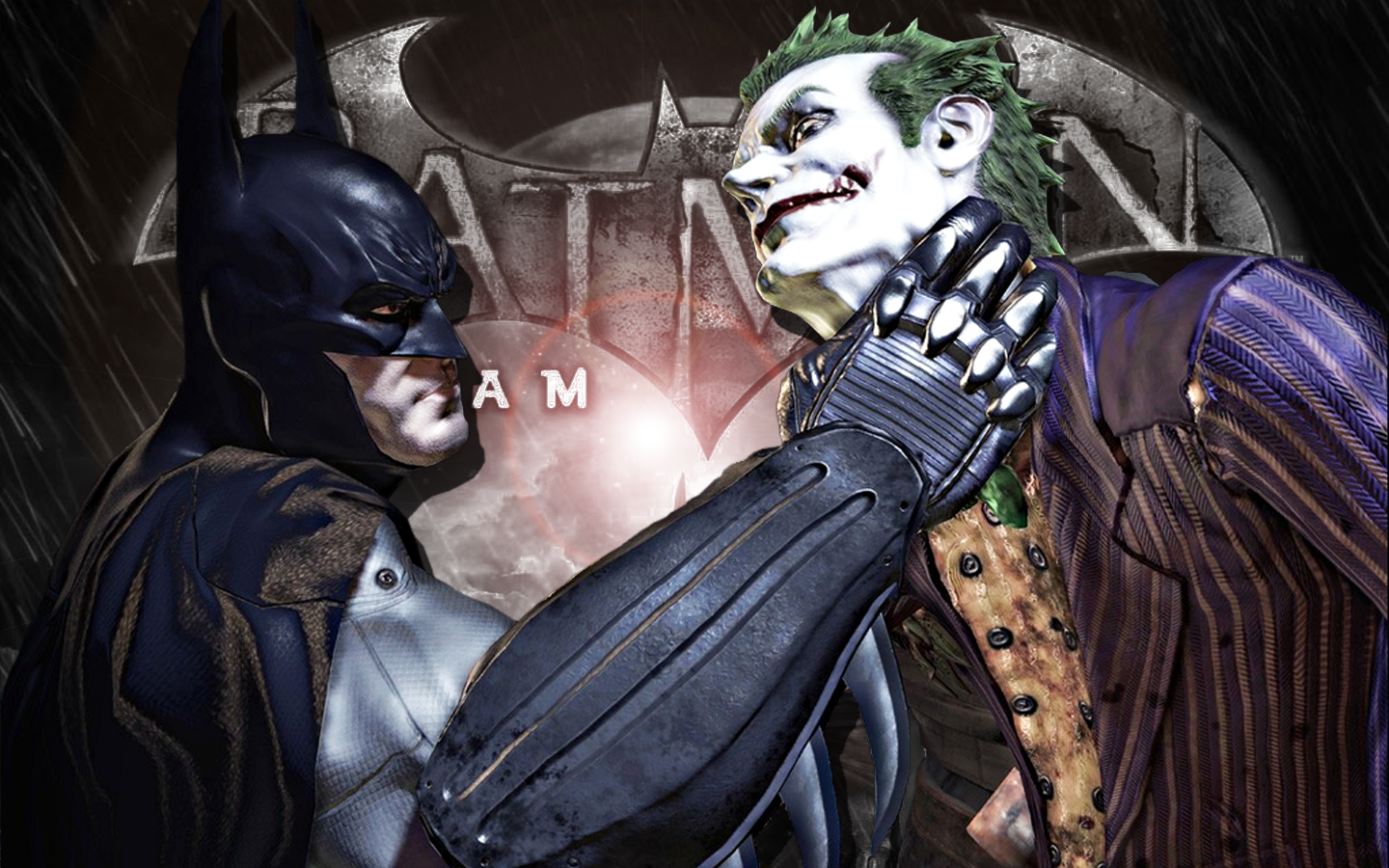
I Must Not Be Batman

You know what's really cool? We're gonna talk about deontology vs. utilitarianism in terms of superheroes, and you're going to understand
Aren't comics awesome?!

For those of you who don't notice the logos that precede the blockbuster movies you've been watching recently, in the world of comic book superheroes, there are two giants: Marvel and DC. Now, upfront, I'll cop to being a Marvel fan more than anything else. Spider-man is my spirit animal and I've never really connected with any of the characters in the DC Universe.

There is, however, a reason for that. You see, Marvel makes characters, and sometimes they make heroes. We can connect to them because they're flawed, and human, and they're often losers. But DC is different. DC makes ideas.

Hang with me on this. We'll start with Superman.

And I love you, Random Citizen! *

*Not actually Superman quote.

Superman is maybe the most famous superhero on the face of the planet. In case you haven't left the shelter of your rock since 1938, he's an alien who escaped to Kansas when his home planet exploded, leaving him the last of his race. It's fortunate there's only one of him, because Superman is terrifying. Superman is a physical god. He's faster, stronger, and more resilient than anything Earth has ever managed to crank out. Compounding that, according to All-Star Superman, his brain is super, too. He can see wavelengths humans might not even know about, and his mind operates at a swifter pace. Basically, he wins at everything, always.

On a story theory level, this is a serious problem, because people rarely take an interest in god-level characters. God-men don't struggle, and stories without struggle aren't interesting. So the problem the writers of Superman are faced with is how to make Superman somebody worth reading about. Clearly they succeeded—if they hadn't, we wouldn't be churning out movies, cartoons, and songs (and songs, and songs, and songs) about the guy. And Bill (the guy who gets killedwouldn't spend three solid minutes talking about him.

The trick is that Superman's struggle is all to do with his monumental choice. Given what power he has, he has to decide whether to save the world or destroy it. He's a giant walking among ants. He can do whatever he wants. So he decides he wants to save it. (Check out this video for a much more detailed look at this aspect of his character.)

Of course, the thing about being a giant is that you have to be very, very careful where you step. So Superman is always following his own unbreakable code of ethics. He doesn't lie, cheat, steal, or play dirty at any step of the game. He's a dyed-in-the-wool Boy Scout.

Batman could not be more different.

Taking a fiercely contested second place to Superman for most-recognized-superhero, Batman makes up for it by being, perhaps, the most butt-kicking. In direct contrast to Superman (who has ALL the powers) Batsy has no superpowers at all (except his budget). He's a master fighter, a spectacular detective, and generally a terrifying ninja. But he does it without any supernatural powers. Where Superman is godlike, Batman is wholly human.

To make up for his lack, though, Batman has no limits. He has exactly one rule ("Thou shalt not kill") that he won't break, but short of that, anything and everything is fair game. He will do whatever it takes to stop the bad guys, from psychological warfare to breaking bones to spying on an entire city. From his perspective, these are necessary—he has nothing else to fall back on. Superman can afford to be a Boy Scout because he has enough power to back it up. Batman doesn't, and therefore can't.

Loosely speaking, Batman embodies a utilitarian ethic ("the end justifies the means"), while Supes personifies a deontological one ("the means justify the end"). This delineation defines almost every aspect of their personalities. Superman is associated with truth and justice, while Batman is known as the Dark Knight. Superman is polite, well-intentioned, and cautious. Batman is gruff and he will slam your face into a table.

He is the night, and he does not have time for your nonsense.

You can learn a lot about a culture by looking at the heroes they immortalize in stories. Greece had Odysseus, Rome had Julius Caesar, France has...erm...I'll go with Jean Claude van Damme. And America has Superman, Batman, and all the characters falling in between.

For a long while, Superman was considered our biggest cultural icon. He was the principal figure of the Golden Age of Comics, when men were men, übermensch were übermensch, and women were just...sort of...there. (Because there had to be some diversity, right?)

The Golden Age of Comics, though, eventually gave way to the Modern Age (where we are now). In the Golden Age and most of its successors, comics leaned Superman-wardly, because America thought of Supes as our avatar in fiction. Like Superman, we were powerful and responsible. We needed to be careful where we stepped. Most of all, we were required to be righteous—to do the right thing, no matter what it cost in the long run.

But in the Modern Age, that zeitgeist has vanished. Comics have shifted away from Superman's rosy perspective to the grittier world of the Dark Knight. The 80's saw the deconstruction of the superhero-as-a-nice-guy. Now we have Jack Bauer, Gregory House M.D., Ozymandias and Rorschach, and the Doctor. We've crawled sneakily away from the shiny ethics of Clark Kent to the far more frightening, far more efficient world of Bruce Wayne. We care more about competence than compassion.

This isn't just evident in our stories, or in our politics (looking at you, U.S. government). Look closely enough and you'll see it everywhere. The temptation is to buy into Batman's worldview, because, let's face it, Batman gets the job done. He does the only thing that makes sense. His world doesn't have rules, and even if it did, there's no one to back them up—except him. He does what's necessary because no one else can. Compassion is well and good, but he'll take competence every time.

I worry that sometimes I tend to think that way, too.

I'm the guy on the left.

For a long while, I've had a serious issue accepting the Christian subculture, because for the most part, it is just that: sub-cultural. Our attempts at making art are generally not very good. (I'm looking at you, Facing the Giants. And you, Fireproof. And you, Family Christian Bookstore.) Our church services can often really suck. So, too, can our church communities. As a widespread rule, I did not find the church able. They weren't competent. They had a job to do and they were failing to do it.

I couldn't forgive that.

I've been confronted, though, with the fact that God does not go looking for competence. In fact, "competence" is somewhere near the bottom of the list of divine qualifiers. If memory serves, God picked someone for competence once. Once. (It's in 1 Samuel. The candidate is good-looking, a powerful warrior, a compelling speaker. He's the king Batman would choose. He tanked the job so bad that God picked his successor halfway through his reign. Nothing like meeting your replacement, especially when he's a scrawny, metrosexual, seventeen-year-old shepherd with a thing for the harp.)

Missionary to the Gentiles? Started out as a religious persecutor. Apostles? Mostly uneducated fishermen, plus a slimy money launderer and a terrorist. Best-known Jewish king in history? Promoted from "sheep-herder boy." Savior of the human race? Born amongst pigs and cattle, to a disgraced 16-and-Pregnant mother and a seemingly-cuckolded carpenter, in a backwoods town in a downtrodden nation of failures and former slaves.

God does not pick based on competence. It's not His style.

With this in mind, I'm making a resolution: I must not try to be Batman any more.

Let competence live and die on its own.
Let the Christian cool factor fluctuate.
Let my instinct to be awesome—to do awesome things that would make God proud of me—starve to death.

So Christians really suck at making movies/music/what-have-you. Our competence isn't what saves the world.

That's Jesus' job.

Time to leave it to Superman.

Thursday, May 2, 2013

So What Is a Writer, Really?


What is a writer?

Are you ready for this? I'm going to blow your mind.

A writer is one who writes.

Take note of the present tense, as it is the most important part of that definition.


I think most aspiring writers have adopted the mindset that "writer" is an adjective written on our hearts from the day we were born. It means deep thinker, and storyteller, and wordsmith. It almost always means lover of books, and words, and ideas. It can mean poet or newsman or novelist. In popular thought it rarely coincides with "mathematician" or even "able to add things." But we view it as irrevocably and undeniably a part of who we are. Whatever else may happen, our identity is firmly lodged in two things: "I am human," and "I am writer." Nothing removes that.

This, I think, is wrong.

One who writes. That's it. That's all there is to that definition. It doesn't have to mean published. It doesn't even have to mean good. But it connotes a necessity of persistence.


A writer is not "one who wrote while in high school, but recently has been focusing on other projects." A writer is not "one who got good grades in English class and has a brilliant idea for a book." A writer is not "one who dreams wistfully of becoming J.K. Rowling/J.R.R. Tolkien/C.S. Lewis/K.A. Applegate/Robert Heinlein/Patrick Rothfuss/what-have-you."

It can have those things. But they're all useless to you unless you're doing. Wanting to write, having written, trained in writing—these are all good things. Wrote a novel once. Have a great idea for a book. Love writing.

Those are excellent, in fact. But they are useless to us unless we are writing.

Someone who claims to be an athlete but never sets foot in a gym is not an athlete. A carpenter who never touches wood is not a carpenter. A practitioner who doesn't practice is a liar or a fool. The practice—doing the thing—is built into the word.

You may feel that writing is a thing etched into your soul. I wouldn't be surprised if it is. Communication is one of the great human purposes. It's how we brush up against the soul of other humans.

But what use is a thing in your soul if you never pour it out through your hands?

*

I must be honest with you: I'm dogmatic on this because I can't afford not to be.

By my own stringent definition, I've not been a dedicated writer for three months. When I wrote the 64-Day Hypocrite, I fully intended to get back to writing. To get back in touch with the wild thrill of making things up and writing them down. And, to an extent, I have. But not yet to the same degree I had in January. It's hard to gain the momentum back. I know it's possible. I just haven't had the requisite willpower to do it, and now school has fallen on me like a granite block and I can't wriggle out long enough to scribble a single meaningful sentence. All my creative energies go toward school and people. Even this blog post is an assignment.

So, in a sense, I have an excuse, and that's the most dangerous place in the world.

I can't afford to have excuses for very long. Even less can I permit myself to buy into the idea that we're defined as writers by our passions instead of where our passions drive us. If I shift the definition of the word so that it will always include me, no matter what I do with my time, then I have no need for relentless creativity. I'm still a "writer" if I lay in bed all day and do nothing. I'm still a "writer" when I while away my hours on video games. In short, folks, I would have no need to DO anything.

That's what matters, really. It's not what you are. It's what you do. It's where your time goes. It's where your passions lead you. You can make claims all you like, the way I've done for so many years—being a hobbyist writer talking about how awesome things were going to be when I finished the writing that I wasn't really doing, instead of a dedicated and purposeful maker. That's the difference. That's the knife edge separating fulfillment and bitterness: while self-important hobbyists wax eloquent of the things they'll do when they have the time, the ones who care enough to succeed are busy doing it.

What are your thoughts, reader? What is a writer, really?

Thursday, April 25, 2013

The (In)Complete List of Tips to Stay Creative

One of the most miserable questions with writing is the inevitable one of creativity: "How do I stay creative? How do I avoid writer's block? How can I keep writing?"

Personally, I'm of the opinion that writer's block is just creative fatigue (or sometimes fear), and the best way to keep writing is just to grit your teeth and move ahead—it's easier to edit a poorly-written page than an empty one—but even so, it's good for creative muscles to stay limber. So I'm gathering as many tips for staying creative as I can, and leaving them here. It will probably grow. For now, I'm organizing it like an exercise regimen, because it's the closest metaphor I can think of.

Let's get straight to it, then, shall we?*

Stretches

Cramps happen in the body, but they can happen creatively, too. Limberness can help prevent stiffness in your creative output.
  • Make lists.
  • Make charts.
  • Make maps.
  • Make diagrams.
  • Sketch things.
  • Have a way of keeping track of ideas, even if it's just jotting them down on your cell phone or in a notebook. (Actually, notebooks are great if you're into the romanticized writer trope.) This isn't initially a way of getting great ideas, at least not at first. But it's helpful in the long run. If you don't treat any ideas as worthwhile, you train yourself not to have any more of them. Quantity's no guarantee of eventual quality, but it can certainly help.
  • Think deeply about things—even silly things (especially silly things). Why do you believe what you believe? Why does culture function this way and not that way? What would happen if—?
  • Entertain every idea to the fullest extent you can manage. Even if the idea amounts to nothing, you've made your ideation more flexible and robust.
  • People-watch in the least creepy manner available to you. Make up stories about what they're doing, where they're going, and why—always why.
  • Surround yourself with creative people. Make them your friends. Bonus points if they're actually fun to be around.

Diet

For a while, I thought I was really good at this. Put simply, I'm an art glutton. I can watch TV all day if you let me. I sucked, though, at thinking about the art I kept ingesting. There was no consideration in my consumption. That's crucial. You can't just watch things or read things and expect it to make you a better writer. As in love, so in art: engagement is a big deal. (That's a horrid joke and I'm ashamed of it.)
  • Ingest art you love. What about it appeals to you? Why does it resonate? Try to see past the curtain. What's going on behind the scenes?
  • Consider art you hate. (Don't do too much of this or it might seep in.) Why don't you like it? What about it conflicts with your own artistic sensibilities?
  • Analyze successful books, movies, or shows. Pick them apart mentally and with friends.
  • Try to think in archetypes. Break stories down to their tiniest parts and see what they really are. A good way to do this is to transpose stories. "This is about a football team in west Texas, but what if it's just the same as King Arthur's court?" Alternately, check out this compilation about how Taken and Finding Nemo are almost the same movie, in a way.
  • Find some music you can listen to without becoming distracted. I'm partial to ambient music, like Embers, the Album LeafExplosions in the Sky, or Port Blue, but that may not be your style. Peers of mine will often listen to music that reflects the mood they're trying to write in, be that slightly frenetic or folky or stately or whatever. The key is that it not distract you from what you're writing.

Workout

Once you're limber and well-fed, the really tough part of actually doing stuff comes around. This is where most of us get a bit gun-shy (or maybe that's just me). It's necessary, though. We must work at it. It's not enough to be a creative genius or an incisive thinker if you never do anything with it.
  • Write.
  • Keep writing.
  • Take a break—but try to do this only after you've actually done something. Creativity is like a muscle. It's good to rest it after a workout, but if all you do is rest it, nothing gets done.
  • Write some more.
  • Get feedback from some of the creative friends you made back in Staying Limber.
  • Keep writing.
  • Finish things.
  • Edit the finished things.
  • Edit some more.
  • Believe in what you've made.
  • Get more feedback.
  • Remember: no one is obligated to care about your story, so it's your job to make it as brilliant as it can possibly be. Edit some more.
  • Stay focused.
  • Write.

Hazards

Nomming on the Galactus Burger with an XXL packet of fries and a 72-oz. bucket of sugar water, augmented by the Double Death by Chocolate Shake, is explicitly forbidden in the codes of exercisers everywhere (even though none of the above items technically exists). Same thing with creativity: there are some things which simply aren't wise to do. They'll gum up the works hard and fast.
  • Time-waster sites. I won't list them here (since that would only give us more things to use for time-wasting), but it's not as if they're hard to spot. Odds are good that as soon as you read "Habits to Avoid," you thought of one. One helpful tool for preventing Internet time-wasting is the Stay Focused Google add-on.
  • Most video games. While I won't deny they can be fun, and even sometimes a form of storytelling, most of them are a numbing agent. They're doing you no good.
  • Mindless television.
  • Beating yourself up. Self-hatred is a pretty standard human problem, but indulging in it isn't going to do you any good.
  • Hating what you make. Also nearly universal problem, but a terrible habit to keep. If you start hating what you make, take a step back from it.
  • Shooting down ideas for not being "good enough." Doing this trains your brain never to think of any ideas. Play with any idea that crosses your mind.
  • Stopping in the middle of something. This is, by far, the hardest one for me. In my entire life, I've finished exactly 1 (one) longterm project. It was 332 pages, single-spaced, and it was awful, but it was finished. Finishing things is a critical habit to have.

Miscellaneous Encouragement


*If you happen to be a creative type, but not the writing creative type, good for you! Parts of this aren't quite going to be geared toward you, but in general if you replace "write" with "make stuff," you should do just fine.